
February 11, 2026
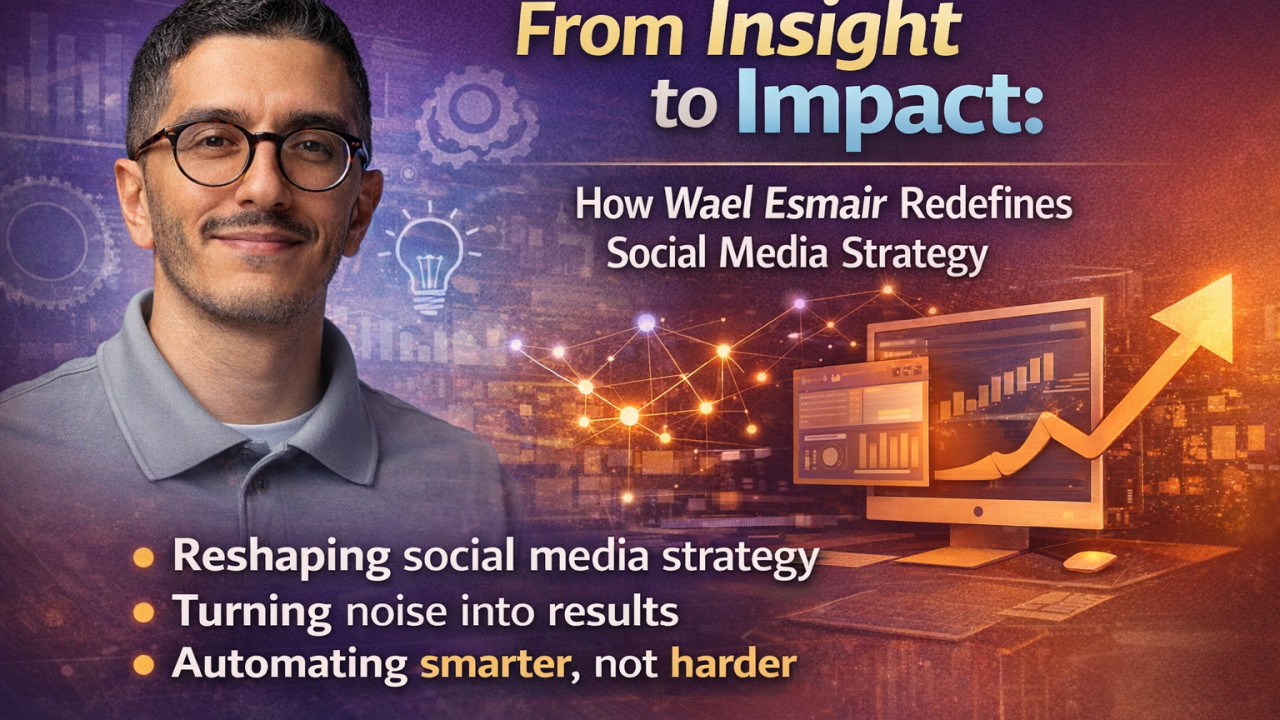
Some people join a community. Others reshape it so gradually that you only notice when you look back and realize the conversations got sharper, the thinking got bolder, and the bar moved - without anyone making a speech about it.
Wael Esmair is that second kind.
Within the WITI community, Wael has become the person others reference mid-sentence: "As Wael put it last session…" Not because he dominates the room, but because his contributions have a way of cutting through complexity and landing on something usable. His thinking is strategic without being abstract, direct without being reductive. In a community built on authentic exchange and diverse thinking styles, that kind of precision matters - it gives everyone else something solid to build on.
What's more remarkable is the generosity behind it. Wael shares experience without reservation, challenges assumptions in ways that sharpen rather than diminish them, and consistently makes the work about the collective outcome rather than his own profile. Depth paired with humility is rare in any professional setting. In a room full of accomplished leaders, it's rarer still.
If you want to understand how Wael thinks, watch him teach.
In a recent WITI session on social media marketing, Wael tackled a problem that quietly torments most business owners: how to maintain a meaningful online presence without letting it consume your life. Rather than opening with theory or a slick framework, he started with empathy.
"If you're trying to run a business, that is a full-time job in and of itself on top of running your business," he told the group. "The more hats you end up wearing, you're going to burn out. This is just a hard reality."
It was a characteristic move - naming the thing everyone in the room was already feeling but hadn't articulated. From there, he systematically dismantled the conventional wisdom that has small business owners chasing their tails on social media. The influencer advice to post ten or fifteen times a day? Disconnected from reality. The performance anxiety that follows a viral post, when everything after it feels like a failure? A trap built on a misunderstanding of how algorithms actually work.
What Wael proposed instead was elegant in its simplicity: build a content baseline - a steady drip of scheduled posts that keeps your business visible - and then free yourself up to do the creative work that actually moves the needle. "This is not what you should do all the time for every piece of content," he explained. "This is just for the drip."
Then he showed them exactly how to do it. Live, on screen, in real time.
What followed was a masterclass in practical execution. Using Canva's Bulk Create feature, Wael walked the group through building 52 variations of a social media post from a single template - an entire year's worth of content for one weekday theme, assembled in minutes rather than months. He pulled in AI tools to generate the copy, mapped it against a CSV, and connected the data fields to the design template. No hand-waving. No "you could theoretically do this." He built it while everyone watched.
The example he chose was deliberately unglamorous - a local tankless water heater company - which itself made a point. This wasn't about flashy brands with design departments and six-figure ad budgets. This was about the plumber, the consultant, the three-person operation that needs to stay visible without hiring an agency.
He moved fluidly between tools - Canva for design, Google's Pomeli for scraping existing brand assets and generating new graphics, Only Social for scheduling across platforms - pausing to share why he favored each one. When he recommended AppSumo as a source for affordable lifetime-deal software, it wasn't a pitch. It was one business owner leveling with others about how to keep costs down without sacrificing capability.
The session's most striking moment came when Wael demonstrated using Claude's browser extension to autonomously navigate Google AI Studio - essentially directing one AI to operate another. He had Claude write a prompt, navigate the interface, take screenshots, and begin building a content-generation app, all without touching his keyboard. It was the kind of demonstration that makes you sit up straighter. But Wael was careful to frame it honestly: "It's not going to do all the lifting. It's not going to do all your thinking. It's not going to generate anything unique or insightful. That's on you."
That line - that's on you - is vintage Wael. He'll hand you every tool in the shed and show you exactly how to use each one, but he won't pretend the tools replace the thinking. The strategy, the taste, the judgment about what actually serves your audience? That remains human work.
Underneath the tactical demonstration was a deeper argument about what social media actually does for a business in 2026 - and what it doesn't.
"I think that when people check in on a business regarding their social media presence, it is to see that that business is still alive," Wael said. "It is not to make a purchase decision off of a social media post."
He called it keeping a pulse. The idea is deceptively simple: for most local businesses, service companies, and B2B operations, social media isn't a conversion engine. It's a trust signal. An inactive page doesn't just look neglected - it raises questions. Are they still in business? Should I trust them with a thousand-dollar job? A steady, professional presence answers those questions before they're ever asked.
It's the kind of reframe that changes how you allocate your time. Stop trying to go viral. Start trying to stay visible. Then invest your real creative energy in the one or two pieces a week that deserve it.
Here's the thing about Wael's contributions to the community: they aren't theoretical exercises. They're drawn from the same operational playbook he runs every day at Nimbus Media, the growth consultancy he built and leads.
Nimbus Media occupies a specific lane in a crowded market - it's the firm you call when you're past the brand -awareness phase and need marketing architecture that ties directly to pipeline and revenue. Wael and his team work with organizations to sharpen positioning, build disciplined demand-generation systems, and create scalable growth engines that convert attention into measurable business outcomes. No vanity metrics. No dashboards designed to look impressive in a quarterly deck while pipeline stalls.
That session on content pipelines? It was a window into how Nimbus Media thinks about efficiency and scale for its own clients. The insistence on systems over heroics, on baseline infrastructure that frees up bandwidth for high-value creative work - that's not just advice Wael gives to a room. It's the architecture his company is built on.
Communities don't elevate themselves. They rise because specific individuals choose to invest more than they extract - consistently, without fanfare, over time. Wael is one of those people, and WITI Professional Association is stronger for it.
When he stays after the session to answer questions about consolidating regional social media pages, or when he patiently walks someone through a tool they've never touched, he's doing the quiet work that compounds. The kind that doesn't generate applause but generates trust.
So: thank you, Wael, for raising the standard of every room you enter. For building a company that reflects the same rigor and generosity you bring to the community. And - on a personal note - happy birthday. May the year ahead bring bold ideas, hard-won momentum, and continued growth for you and the entire Nimbus Media team.
If you haven't connected with Wael yet, now's the time. And if your organization is ready to get serious about growth strategy, Nimbus Media is worth a close look.